Sponsored by: Boston Scientific

You can also choose to use TommieBot, an AI search assistant developed by St. Thomas School of Engineering students and faculty.
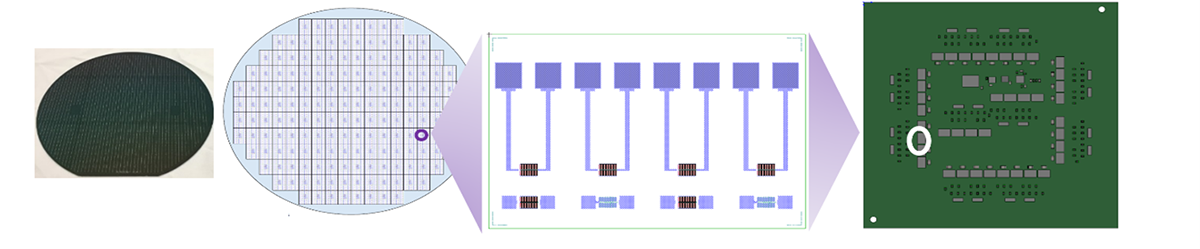
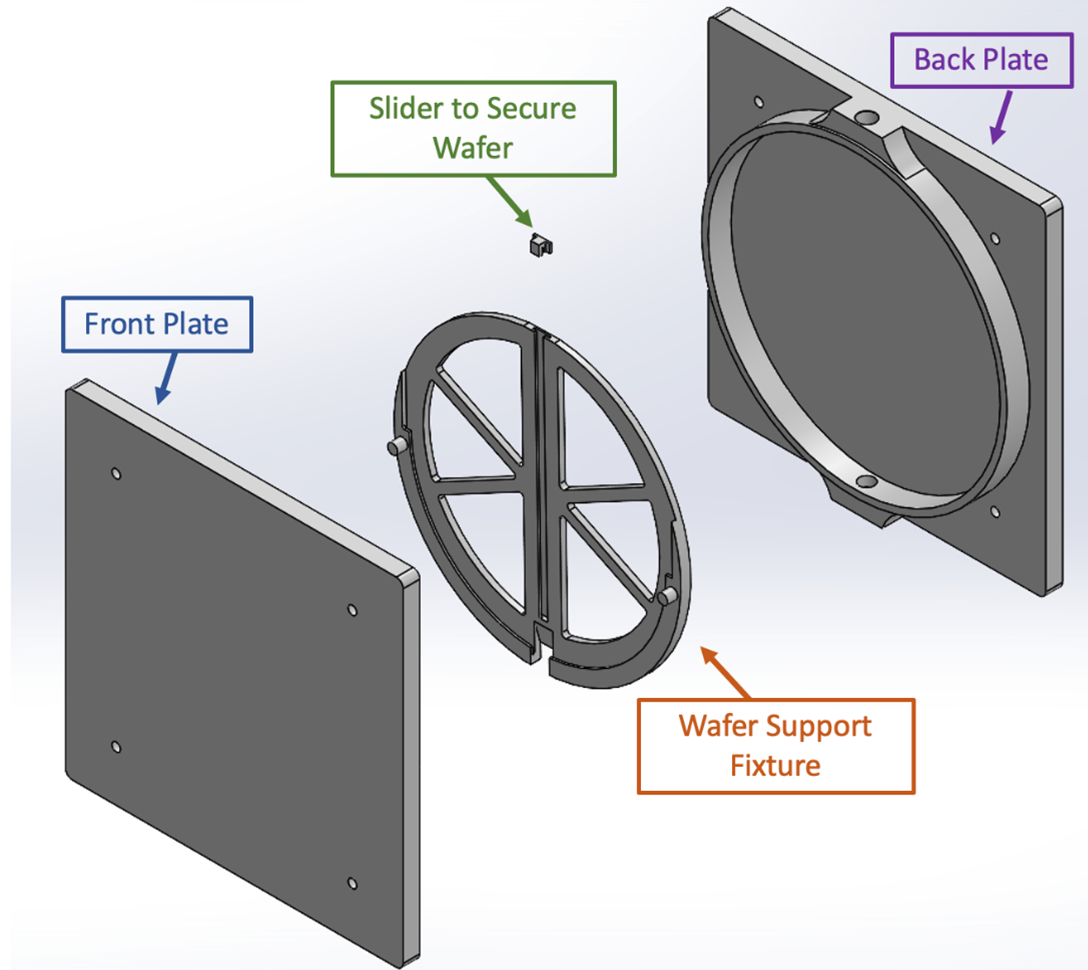
Take me to TommieBotIn the United States, lung cancer is one of the leading causes of cancer death. To increase the rate of early lung cancer detection, Boston Scientific’s breath sensor team has developed a non-invasive lung cancer screening device. This device uses sensors to measure volatile organic compounds (VOCs) in exhaled breath. The 120 sensors on the device map out a breath print, unique to the individual. The patterns in the VOCs from the breath print are then used to determine whether the individual has lung cancer. The sensors on the lung cancer screening device must go through a functionalization process where they are soaked in a solvent-receptor solution, rinsed, and then dried. Boston Scientific is looking to improve this process by creating a system that functionalizes full or partial wafers, opposed to their current process of functionalizing single sensors.
The goal of this project is to design a system that functionalizes the sensors on the surface of full or partial silicon wafers.
Sponsored by: Boston Scientific
Student Team:
Industry Representatives: Raia Finc and Greg Sherwood
Faculty Advisor: Francis Porbeni
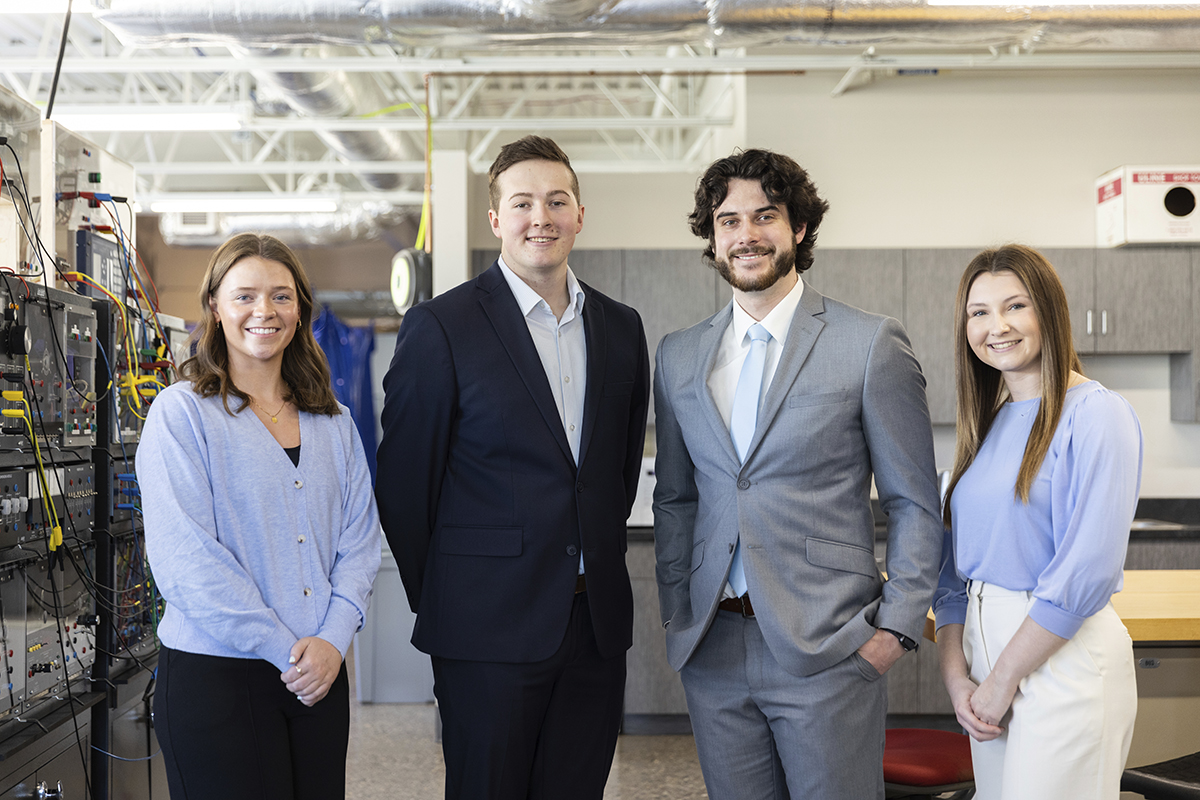
Pictured left to right: Jolee Mesler, Evan Schwarz, Ethan Deutsch, Elizabeth Mink