Sponsored by: Andean Alliance for Sustainable Development
You can also choose to use TommieBot, an AI search assistant developed by St. Thomas School of Engineering students and faculty.
Take me to TommieBotThe current methods for coffee quality analysis used by AASD to provide feedback to local farmers are extremely time-consuming. Our project aims to streamline this process, enabling AASD to analyze a greater number of samples, thereby extending support to more farmers. Comprising three modules, the project accepts samples of 350 grams of beans in the parchment stage. Module one addresses the removal of parchment, a papery substance on the beans. Module two incorporates a rotating mesh drum to sift out beans smaller than a 15mm circumference, since smaller beans roast at a faster rate and will burn when roasted with larger ones. The third module integrates machine learning for defect identification and outputs a detailed report of bean defects, facilitating informed feedback from AASD to farmers. This feedback loop enables farmers to enhance their coffee quality and increase their revenue.
Our objective is to equip Peruvian coffee farmers with the necessary tools to advocate for equitable compensation and to provide them with constructive feedback for enhancing the quality of their coffee bean harvest.
Sponsored by: Andean Alliance for Sustainable Development
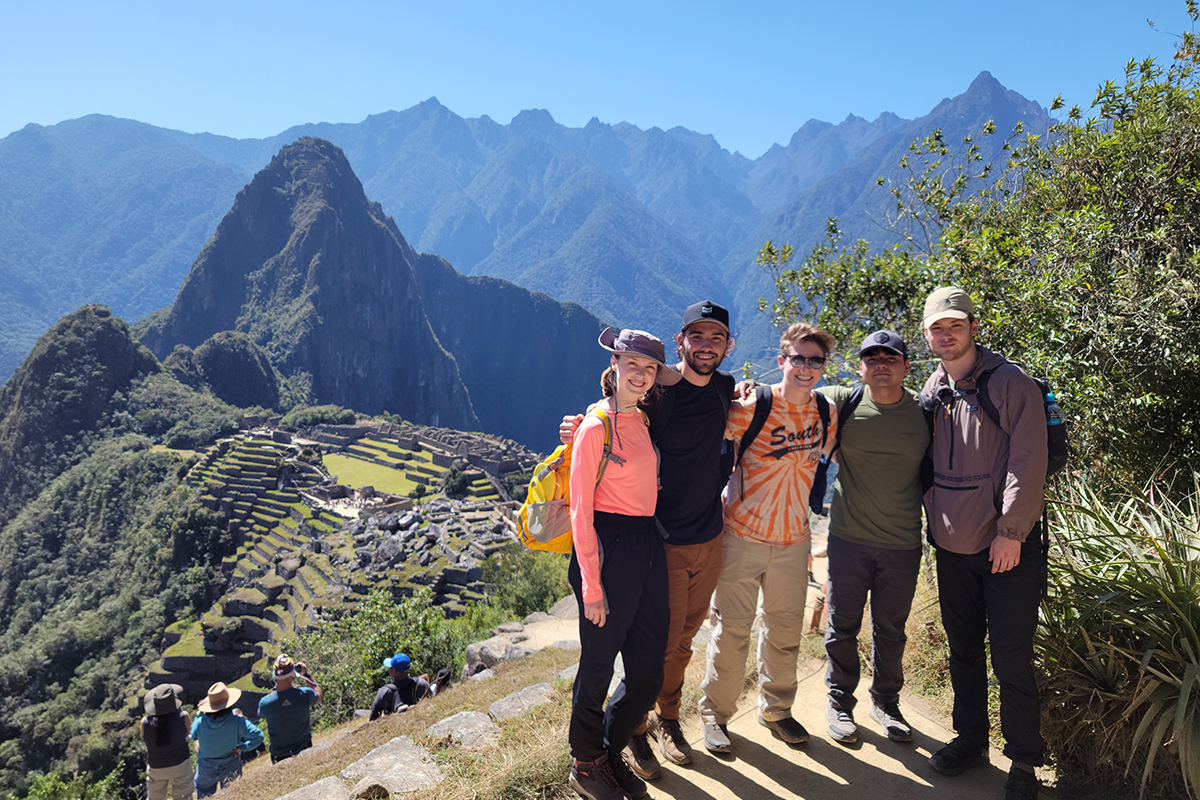
Student Team:
Industry Representatives: Aaron Ebner and Luke Agness
Faculty Advisor: Dr. Brittany Nelson-Cheeseman
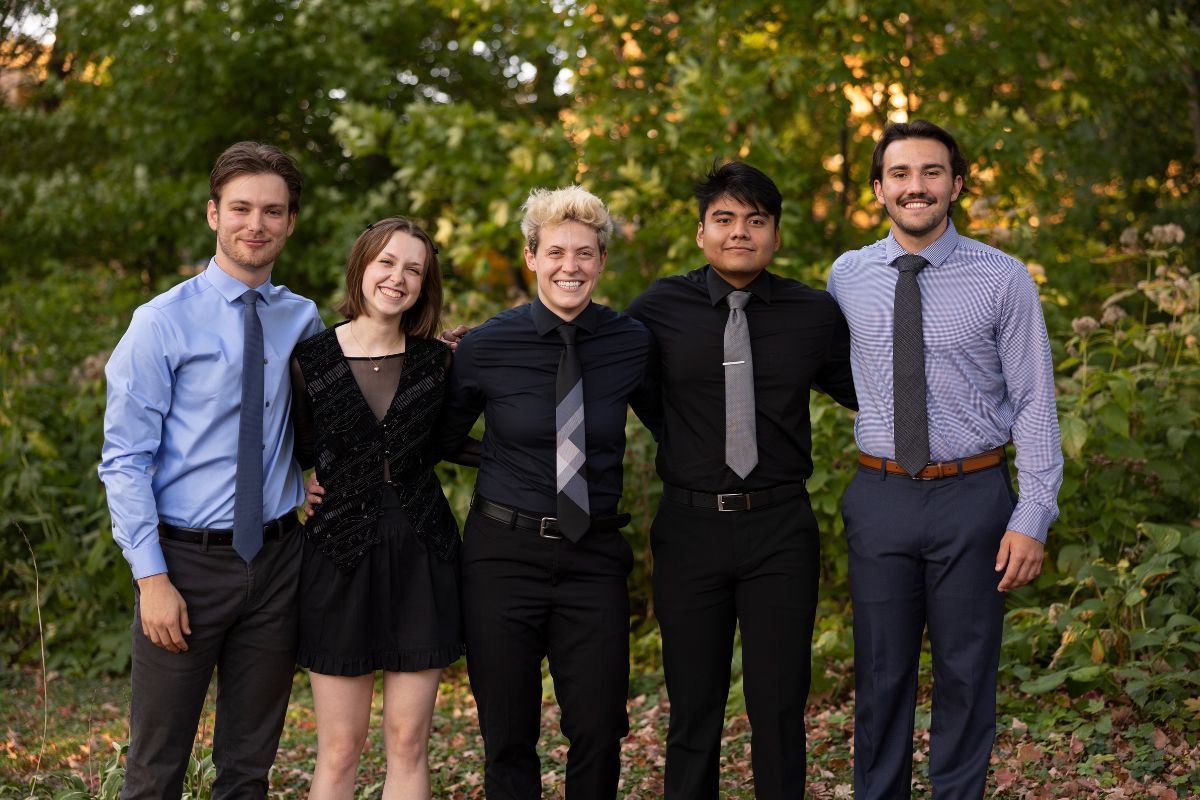
Pictured left to right: Noah Link, Cienna Becker, Claire Bentfield, Martin Rios de la Rosa, Blake Blattner