Sponsored by:

You can also choose to use TommieBot, an AI search assistant developed by St. Thomas School of Engineering students and faculty.
Take me to TommieBotProject Summary
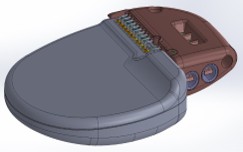
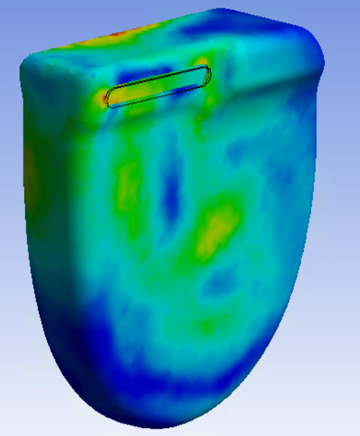
There are only a few pediatric patients who require an ICD, which means that there is little financial incentive for medical device manufacturers to develop a pediatric-specific device. The future engineers at the University of St. Thomas worked with Medtronic to develop and test concepts of a pediatric-focused device featuring existing materials to reduce Medtronic’s overall cost of pediatric ICD development. The team has performed several simulations and produced a model to demonstrate feasibility. The electrical simulations validate the device’s electrical requirements, demonstrating that it delivers 15 joules of energy in under 22 seconds. The prototype, CAD model, and force simulations confirm the mechanical requirements, ensuring that all components fit properly and that the redesigned form factor is both reliable and safe.
Design Goal
The goal is to reduce the size of the existing implantable cardioverter defibrillator (ICD) device to enhance comfort for the smallest pediatric patients (weighing under 40 lbs).
Design Constraints
Download the project summary (PDF file).
Sponsored by:
Student Team:
Industry Representative: Matthew Deutsch and Rachel Bruckner
Faculty Advisor: Paul Mazanec
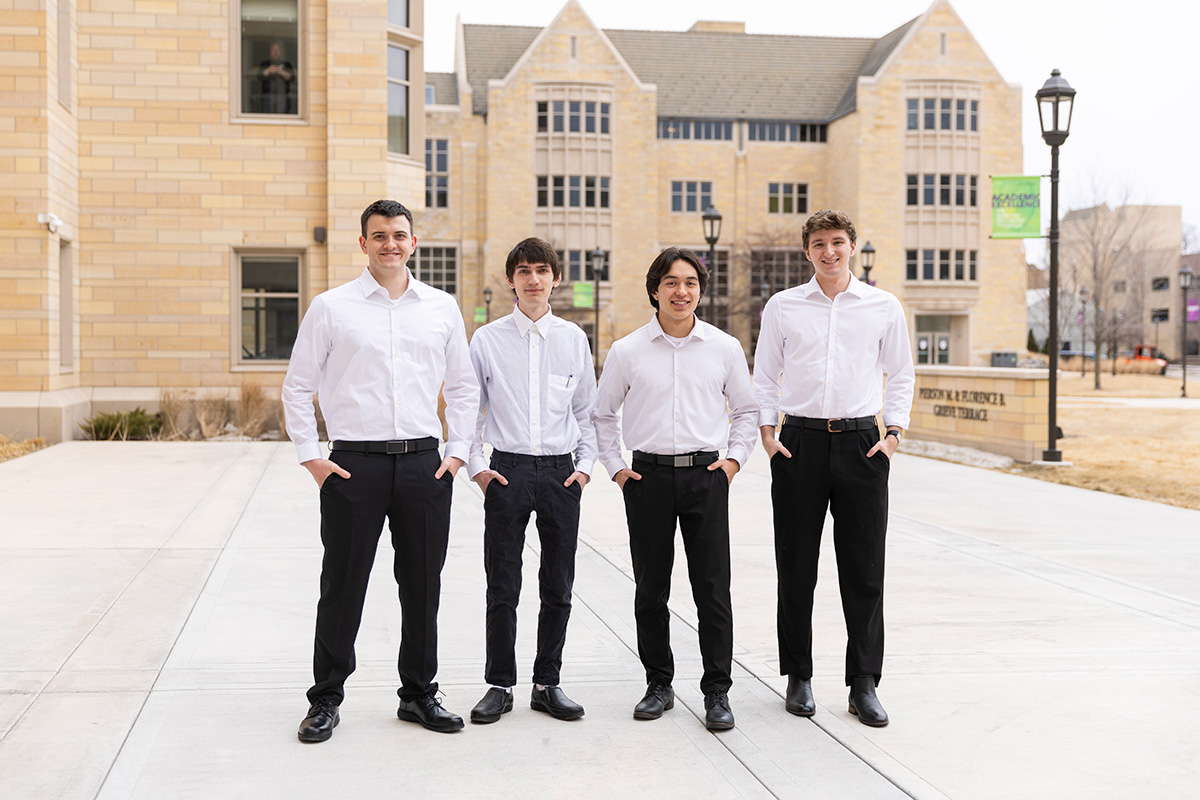
Pictured left to right: Chris Weidenbach, William Schoon, Nathan Brownell, Aidan Barnes.