Sponsored by: Safran Test Cells

You can also choose to use TommieBot, an AI search assistant developed by St. Thomas School of Engineering students and faculty.
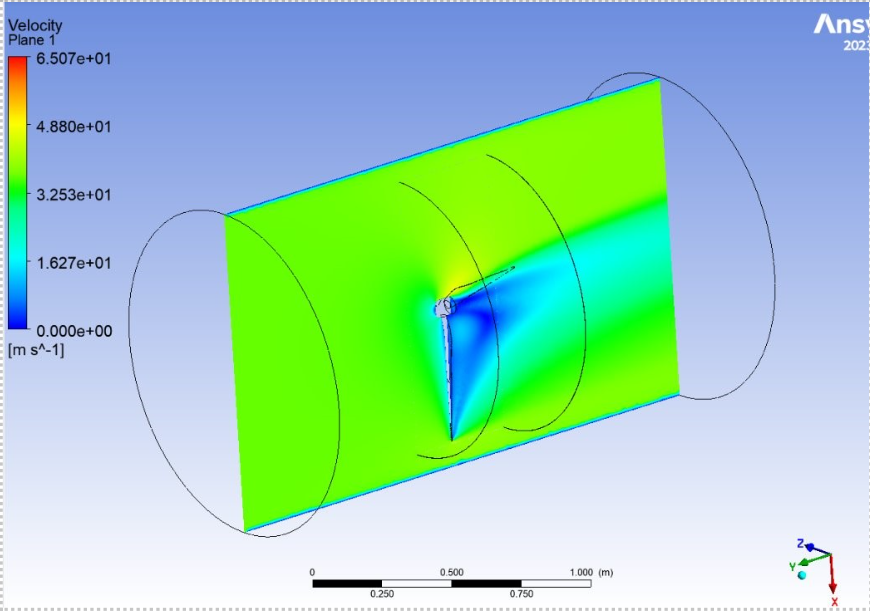
Take me to TommieBotSafran Test Cells produces facilities that test jet engines. During testing, the engines move large quantities of energy through the facility in the form of wind energy, which is then expended into the atmosphere with nothing in return. Safran is looking to see if there is a way to recapture this energy to be used elsewhere in the facility and reduce the overall carbon footprint of the aviation industry. For an energy recovery system to be considered feasible, the energy savings must equate the system’s cost within 5 years and the system must not impede the performance of the facility. Our task was to determine if significant energy recovery was possible within 5 years.
Provide an analysis of the feasibility of putting a wind energy recovery system inside a wind tunnel for significant energy recovery.
Preliminarily design a system that is able to recapture wind energy propagating though a test cell. The energy should be transferred to a load and the system cannot impede the performance of the test facility. This system shall achieve energy savings equal to the system’s cost within 5 years.
Sponsored by: Safran Test Cells
Student Team:
Industry Representatives: Alex Dudek and Ryan Thompson
Faculty Advisor: Rita Lederle
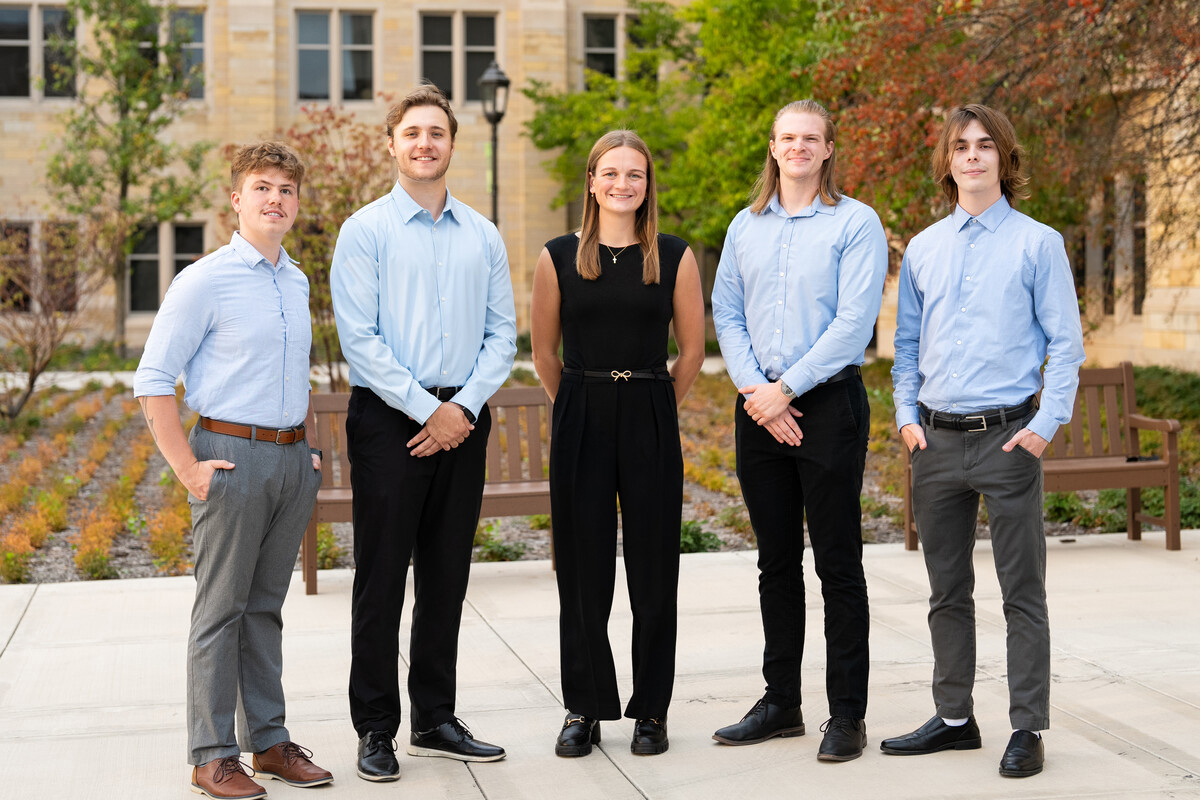
Pictured left to right: Alex Lutz, Triston Johnson, Phoebe Frentzel, Morgan Ling, Abram Wiens